
What Is Carryback?
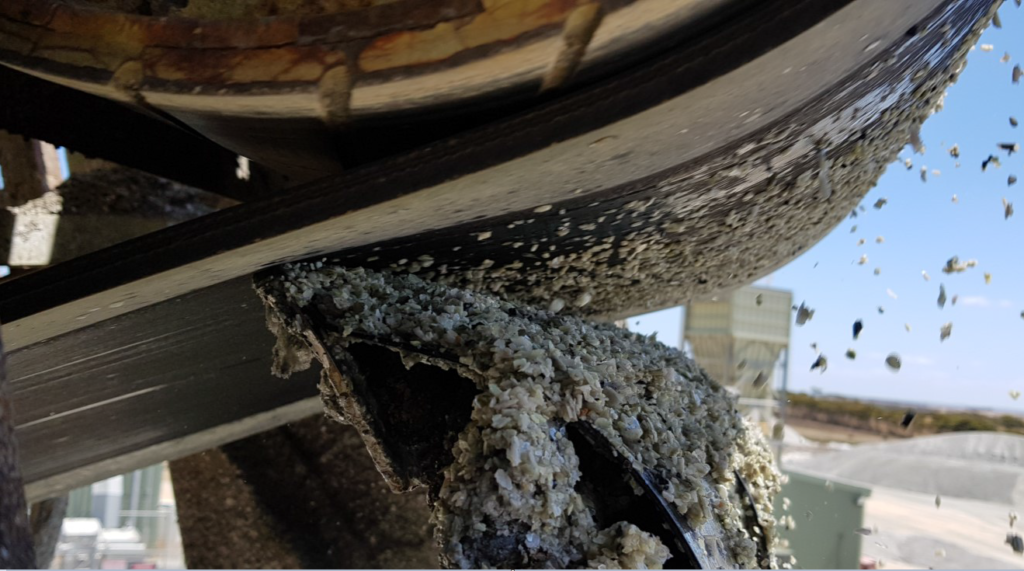
Carryback is material that remains stuck to a conveyor belt after it passes the discharge point. Instead of leaving the belt with the main material flow, this residue travels along the return side, where it can fall onto the ground or accumulate on conveyor components.
For mines, quarries, processing plants and bulk handling facilities, carryback can become a recurring source of cleaning, maintenance and downtime. A thin layer left on a moving belt may look insignificant, but repeated belt cycles can spread substantial amounts of material through the plant.
At HOSCH Australia, our approach is to assess the material, belt condition and cleaning arrangement together. Understanding why material remains on the belt is the first step towards choosing a practical solution.
How Does Conveyor Belt Carryback Occur?
A conveyor transports material along its carrying side towards the head pulley. At discharge, the bulk of the load leaves the belt and enters a chute, stockpile or downstream conveyor.
Some particles remain attached to the belt surface. As the belt wraps around the head pulley, these particles follow it onto the return run.
This remaining material is carryback. It may appear as a wet coating, sticky fines or patches trapped in surface damage. Some drops off beneath the conveyor; some transfers onto return rollers and pulleys. Material that remains attached can travel further around the system.
The result is a cleaning problem that extends beyond the discharge area, even though the material initially escaped removal at that point.
What Causes Carryback?
Carryback usually reflects a combination of material characteristics, belt condition and cleaning performance.
Moisture and Fine Particles
Fine particles and moisture can form an adhesive mixture against the belt. During conveying, smaller particles can settle through the load towards the belt surface, creating a layer that is harder to discharge than the bulk material above it.
Wet ore, coal fines and clay-rich materials can be particularly challenging. Changes in rainfall, feed conditions or processing water may also change cleaning requirements, even when the conveyor itself has not changed.
Worn or Damaged Belt Surfaces
Cuts, grooves and damaged areas can retain material below the surface contacted by a scraper blade. An uneven belt cover can also prevent consistent blade contact.
If carryback follows a narrow strip along the belt, inspect both the relevant cleaning module and the belt surface. Replacing a scraper blade alone may not resolve material trapped in a longitudinal groove.
Unsuitable or Poorly Maintained Scrapers
A cleaner needs to suit the conveyor’s speed, belt dimensions, material and operating conditions. Worn blades, incorrect positioning, unsuitable tension or obstructed modules can allow residue to pass through.
A scraper that previously worked well may also struggle after a change in throughput or material consistency. Assess its current performance against current operating conditions.
Carryback vs Spillage: What Is the Difference?
Carryback and spillage both create unwanted material around conveyors, but their sources differ.
Carryback occurs when material stays attached to the belt beyond discharge and travels onto the return run. Common signs include residue on the return belt, coated rollers and deposits beneath return idlers.
Spillage occurs when material escapes the intended conveying path, often at loading or transfer points. Signs include deposits beside loading zones, leaking skirting or material falling from belt edges.
The distinction matters when selecting a solution. Skirting helps contain material at the loading zone. Belt scrapers remove material adhering to the carrying surface after discharge. A conveyor may need both, but one does not replace the other.
Why Is Carryback a Problem?
Repeated Cleaning Costs
Carryback creates ongoing housekeeping work. Labour, mobile equipment, access arrangements and waste handling all contribute to the cost of removing deposits.
Repeatedly cleaning the same area treats the accumulation while leaving its source active. Recording cleaning frequency and labour hours can help show whether investment in improved belt cleaning is justified.
Build-Up and Belt Mistracking
Material can accumulate unevenly on return rollers and pulleys, changing the surfaces supporting and guiding the belt. This can contribute to mistracking and further spillage.
However, carryback is only one possible cause of belt drift. Loading position, component alignment and belt condition should also be investigated before deciding on corrective work.
Component Wear and Downtime
Persistent deposits can interfere with conveyor components and increase maintenance demands. Abrasive material, contaminated rolling surfaces and associated mistracking can contribute to premature wear.
The cost may extend beyond replacement parts. Unplanned stoppages can interrupt upstream and downstream processes, making conveyor availability a significant part of the carryback assessment.
Dust and Housekeeping Hazards
Wet deposits may become slippery, while accumulated material can obstruct access. Once dry, fine carryback may become another source of airborne dust.
For exposed conveyors near neighbouring properties or townships, controlling this additional dust source can support broader site dust management. Carryback control should sit alongside suitable transfer-point containment and other measures appropriate to the operation.
How Do You Reduce Conveyor Carryback?
1. Assess the Whole Application
Start by identifying where material remains on the belt and where it subsequently accumulates. Review belt width, speed, surface condition, splice type, material properties and available installation space.
Maintenance access and the route for removed material also matter. The most suitable cleaner is one that can operate effectively and be serviced reliably within the actual conveyor arrangement.
2. Use a Suitable Pre-Scraper Where Required
A pre-scraper works at the head pulley to remove the bulk of adhering material. This can reduce the load presented to the main scraper, particularly with thick, sticky deposits.
HOSCH’s pre-scraper range includes equipment for difficult material conditions. Selection should consider the specific application rather than assuming every conveyor needs the same cleaning arrangement.
3. Remove Remaining Residue With a Main Scraper
A main scraper targets material remaining after discharge and any initial cleaning stage. Consistent contact across the required cleaning width is important for removing the finer layer that would otherwise travel along the return belt.
HOSCH offers A1, B-Series, C-Series and D-Series main scrapers for different requirements. The appropriate model and configuration depend on the conveyor, operating conditions and service needs.
4. Install and Maintain Cleaners Correctly
Correct mounting, blade angle and tension are essential. Increasing pressure is not automatically the answer to poor cleaning; excessive pressure can increase wear without addressing the underlying problem.
Follow the requirements for the selected equipment. During planned inspections, check blade wear, module movement, mounting security and material build-up around the assembly. Repair belt defects that prevent effective cleaning.
5. Consider Washing for Demanding Applications
Some applications benefit from a washbox or supplementary water-assisted cleaning to loosen persistent fines. These systems need an appropriate arrangement for removing water and collecting the resulting slurry.
Water should be assessed as part of the complete cleaning system. Adding spray alone can relocate the problem if wet residue then travels down the return run.
6. Manage Removed Material
Scraped material needs a clear route into a suitable chute or collection system. Removing it from the belt achieves little if it immediately accumulates around the scraper or falls onto other equipment.
Assess chute geometry, blockages and drainage alongside scraper performance. Effective cleaning includes both detaching residue and directing it away from the conveyor safely.
How Can You Measure Carryback?
Visual observations help locate problems, but consistent measurements make improvements easier to assess. Establish a baseline before changing equipment, then repeat the assessment under comparable conditions.
Useful measures include:
- Carryback collected over a controlled sampling period.
- Cleaning labour hours and frequency.
- Build-up on return components.
- Scraper blade life and maintenance requirements.
- Downtime associated with material accumulation.
For a simple illustration, a measured loss of 5 kilograms per hour over 16 operating hours equals 80 kilograms per day. Over 300 operating days, that becomes 24 tonnes. These are example figures, not an estimate for a particular conveyor.
Compare results at similar throughput and moisture conditions. Otherwise, a change in feed can obscure whether cleaning performance has improved.
Frequently Asked Questions
Can Carryback Be Completely Eliminated?
Effective cleaning can substantially reduce carryback, but results depend on the material, belt condition and equipment arrangement. Agree on measurable performance expectations for the application rather than assuming every belt can remain completely residue-free.
Will a Belt Plough Remove Carryback?
A return-belt plough generally removes loose material from the inside surface of the return belt before it reaches the tail pulley. It serves a different purpose from scrapers cleaning the material-carrying surface and does not replace them.
Why Does Carryback Return After Cleaning?
Cleaning beneath a conveyor removes deposits already on the ground. If residue continues to pass the discharge-point cleaning system, new deposits will form. Address the source to reduce repeated housekeeping.